 Block
Address Poisoning Scams: The Copy-Paste Trap That Sends Your Crypto to Strangers
Picture this. You're sending crypto to your own second wallet, something you've done a dozen times. You open your transaction history, copy the address from your last transfer, paste it, and hit send. Minutes later, the money is gone. It never reached your wallet, because the address you copied wasn't yours. Welcome to address poisoning scams, one of the quietest and most frustrating tricks in crypto right now.
Security teams and exchanges have been issuing fresh warnings about it lately, and it keeps showing up in the questions people ask about wallet safety. The good news: once you understand the trick, it's very easy to avoid.
What Is an Address Poisoning Scam?
Crypto wallet addresses are long strings of letters and numbers, and nobody memorizes them. So most of us do what feels natural: we look at our recent transactions and copy the address from there.
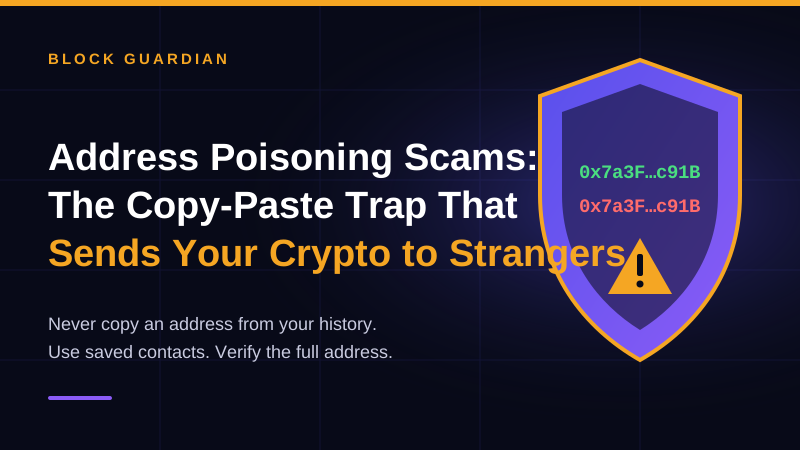
Scammers exploit that habit. They generate a wallet address that looks almost identical to one you've used, matching the first few and last few characters, since those are the parts people glance at. Then they send you a tiny or even zero-value transaction from that look-alike address. Now it sits in your history, right next to the real one, hoping you'll copy the wrong line later.
Nothing was hacked. Your wallet wasn't broken into, and no one needed your seed phrase. The scammer is simply betting on one rushed copy and paste.
Why Address Poisoning Works So Well
This scam is cheap, automated, and aimed at everyone at once. Scammers can spray thousands of wallets with these dust transactions and wait for a single slip. A few reasons it succeeds:
- We trust our own history. If it's in your transaction list, it feels safe. It isn't.
- We only check the edges. Most people compare the first and last four or five characters. Scammers know that and match exactly those.
- Crypto sends are final. There is no bank to call and no chargeback. A wrong address means the funds are almost certainly gone.
- It happens when we're busy. Moving money between exchanges and wallets is exactly when attention drops.
How to Spot a Poisoned Address
The tell is usually hiding in plain sight. Before you send anything, watch for these red flags:
- A transaction you don't remember, especially a tiny amount, zero value, or a token you never owned.
- Two addresses in your history that look nearly the same at first glance.
- Any address that shows up right after you made a real transfer. Scammers often time their dust to appear just after your activity.
If you see a mystery deposit like this, don't click links in it, don't try to "sell" the token, and don't reply to any message attached to it. Just ignore it and make sure you never copy from that line.
How to Protect Yourself From Address Poisoning
You don't need special software to defend against this. You need a few habits:
- Never copy addresses from your transaction history. This one rule defeats the whole scam.
- Use your wallet's address book or saved contacts. Save your trusted addresses once, verified carefully, and pick from that list every time.
- Compare the entire address, not just the ends. Check the middle characters too, or paste it into a note and compare it slowly against the original source.
- Send a small test transaction first when moving a large amount to a new or rarely used address.
- Slow down. Urgency is a scammer's best friend. A 60-second check costs far less than a lost transfer.
Many hardware wallets and wallet apps also let you verify the destination address on the device screen. Use it. It's there for exactly this reason.
The Takeaway: Treat Every Address Like a Stranger
Address poisoning scams don't need to outsmart your security. They only need you to be in a hurry. Make it a rule: you never copy a destination from your history, you always send to a saved and verified contact, and you double check the full address before you confirm. Do that, and this scam has nothing to grab onto.
If you think you've already sent funds to the wrong address, act fast: contact the exchange or platform involved if one was used, document everything, and report it at ic3.gov. Be careful with anyone offering to "recover" your funds for a fee, since that's a separate scam we've covered before.
📩 Stay Ahead of the Next Scam
Get breakdowns like this one — free, straight to your inbox, whenever a new scam or safety risk shows up. No spam, unsubscribe anytime.
#CryptoSecurity #AddressPoisoning #CryptoScams #WalletSafety #CryptoEducation #ScamAlert #Web3Security #SelfCustody #BlockchainSafety #CryptoSafety #StaySafeOnChain #BlockGuardian
⚠️ Disclaimer: This content is for educational and entertainment purposes only and does not constitute financial, investment, legal, or tax advice. If you believe you are the victim of a scam, contact your local law enforcement and file a report at ic3.gov. Always do your own research before making any financial decisions.